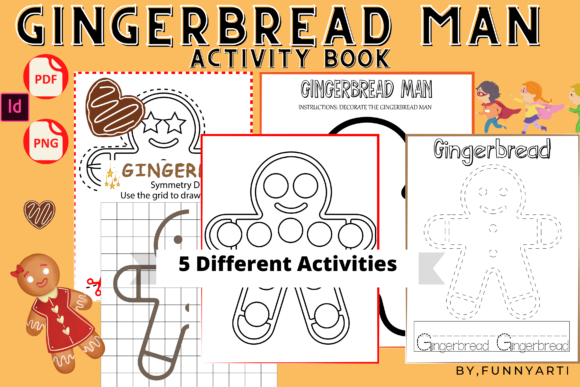
Gingerbread Man Activity Book: A Designer's Review for Holiday Embroidery
As we approach the peak season for holiday crafting, finding the right machine embroidery design can make or break a small shop's inventory. I recently spent time evaluating the Gingerbread Man Activity Book to see if it holds up under the scrutiny of real-world production. For those of us running craft businesses or selling on Etsy, a cute concept isn't enough; the file needs to stitch out cleanly, appeal to customers, and survive the wash cycle. This review breaks down how this specific asset performs when moved from a digital preview to a tangible, stitched product.
First Impressions and Visual Personality
When I first loaded the Gingerbread Man Activity Book into my editing software, the immediate takeaway was its playful, narrative quality. Unlike standard standalone gingerbread motifs that often rely on simple outlines, this design suggests a scene or a collection of elements that tell a story. The layout feels curated for engagement, likely featuring interactive or educational components suitable for children's items. The visual personality is warm and nostalgic, tapping directly into the cozy aesthetic that drives Q4 sales.
For a designer, the mood here is critical. It screams "handmade gift" rather than "mass-produced commodity." The lines appear crisp in the preview, suggesting a good balance between satin stitch borders for definition and fill stitch areas for color saturation. However, the complexity of an "activity book" theme implies there may be finer details—perhaps tiny buttons, icing swirls, or text elements—that require careful attention during the digitizing check before hitting start on the machine.
Real-World Application: From Screen to Stitch
To truly test the viability of this embroidery file, I envisioned a specific project: a custom embroidered tote bag for a boutique client looking for unique holiday merchandise. Tote bags are a staple for Etsy sellers because they offer a large, flat canvas, but they also demand durability. Placing the Gingerbread Man Activity Book on a heavy cotton canvas allowed me to assess how the design handles a textured fabric texture.
The result was promising. The design's scale worked well for a central chest placement on a sweatshirt or a full-face print on a pillow cover. If you are creating custom apparel like family matching pajamas, this design offers enough visual interest to stand out without being overwhelming. For baby embroidery projects, such as bibs or onesies, the whimsical nature fits perfectly, provided the stitch count isn't too high for delicate skin. I could easily see this becoming a bestseller as a personalized gift where a child's name is added beneath the main motif.
Beyond apparel, the versatility extends to home decor. Imagine this stitched onto a linen tea towel or a festive apron for a hostess gift. The finished product exudes a level of professionalism that builds customer trust. When buyers see clean edges and thoughtful composition, they perceive higher value, which justifies a premium price point for your small shop product listings.
Navigating Technical Challenges and Fabric Choices
While the aesthetic is strong, practical application requires caution. An "activity book" theme often implies smaller, intricate details. If you are working with a small hoop size, you might need to split the design or reduce its scale, which risks losing the clarity of tiny elements. On stretchy fabrics like jersey knits used for t-shirts, the stitch density becomes a major factor. If the fill areas are too dense, the fabric will pucker, ruining the look of the gingerbread man.
I recommend testing this design on scrap fabric that matches your final material. If you are stitching on dark fabric, ensure the thread colors provide enough contrast. A common mistake with holiday designs is using reds and greens that blend together on navy or black backgrounds. Additionally, curved surfaces like caps present a challenge. The structural integrity of the design must hold up against the curve of a hat brim; otherwise, the "activity" elements might distort. Always use a high-quality stabilizer—cut-away for knits and tear-away for wovens—to support the weight of the stitches.
Commercial Viability and Brand Consistency
For commercial embroidery professionals, consistency is key. Does the Gingerbread Man Activity Book align with your brand's standard of quality? If you specialize in minimalist modern decor, this whimsical design might clash. However, for shops focusing on traditional holiday cheer or children's boutiques, it is a perfect fit. Using this design in your printable mockup previews can significantly boost buyer engagement on digital marketplaces. Customers want to visualize the end result, and a well-stitched sample photo can be the deciding factor in a purchase.
It is also vital to consider the licensing terms. Before listing items made with this digital embroidery file on Etsy or at craft fairs, confirm whether the license allows for unlimited physical sales or if there are restrictions on the number of finished products. Never assume a file is free for commercial use unless explicitly stated. Protecting your craft business from legal issues is just as important as the stitching itself.
Final Verdict for Makers and Designers
In conclusion, the Gingerbread Man Activity Book is a robust contender for your holiday catalog. Its strength lies in its storytelling capability and its adaptability across various mediums, from embroidered patches to large tote bag designs. While it demands respect regarding fabric choice and stabilization, the payoff is a high-quality handmade product that resonates with the seasonal spirit.
My advice is to run a test stitch-out immediately. Check the trim points, inspect the back of the hoop for excessive thread buildup, and verify that all small details remain distinct. If the test passes, this design has the potential to become a signature piece in your winter collection, delighting customers and adding a touch of magic to your holiday embroidery lineup. Remember, the difference between a good design and a great one often comes down to the maker's attention to detail during those final preparation steps.